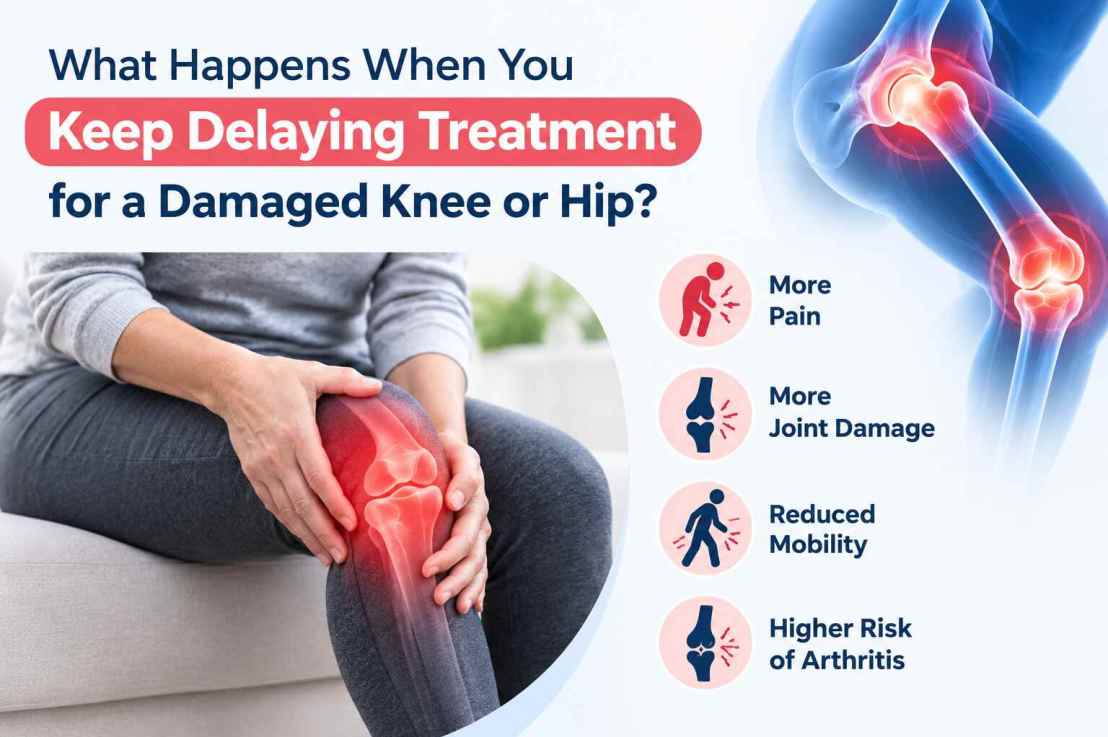
Ignoring knee or hip pain as it’s ‘not that bad’ today? Stepping around the house and avoiding stairs or walking for fear of pain? Knowing the risks of delaying knee treatment can assist in educating you if you’ve got a problem that’s rising to warrant physician attention. Pain might result from an injury, cartilage damage, or some other ailment such as arthritis. At Airmid Hospital, patients can seek guidance to understand their symptoms and available treatment options. Consulting a joint replacement specialist in Rohini does not automatically mean you need surgery. It can help you understand the cause of your pain and decide what steps may protect your joint function.
Why Ignoring Joint Pain Can Make Everyday Life Harder
Pain in the joint is not always relieved by rest. In the case of an untreated joint condition, you might have to suffer from knee pain, swelling, stiffness, or loss of mobility. Simple activities like standing for long durations or getting up from a sitting position might be difficult.
The risks of delaying knee treatment are influenced by the reason for the condition and the seriousness of the condition. A healthy recovery could have been made with proper medical attention in the case of the disease, while in other cases such as cartilage tears or osteoarthritis, the disease becomes chronic due to lack of medical intervention. Ignoring the above issues makes the muscles surrounding the knee weak.
What Could Happen If Knee or Hip Conditions Get Worse?
There are various factors that influence joint movement and provide stability for your body.
- Cartilage damage: Cartilage damage leads to reduced cushioning between bones, resulting in pain and stiffness.
- Meniscus tears: Damage to the knee’s meniscus can lead to inflammation, catching, or problems flexing the knee.
- Rheumatoid arthritis: This inflammatory disease might also affect the joints and lead to inflammation, pain, and stiffness without proper treatment.
- Hip joint degeneration: Progressive alterations in the hip joint may lead to pain in the groin, thigh, or even in the surrounding areas.
Different outcomes may result from unattended joint damage for different individuals. In some cases, worsening knee pain may develop, whereas in others, deterioration of the hip joints may be observed, as well as problems with weight-bearing. Pre-existing joint injury, overweight, joint strain, and aging may affect joint health.
Warning Signs You Should Not Keep Ignoring
The following are some of the symptoms that may indicate the need to have your knees examined. Look out for:
- Persistent pain that keeps returning
- Joint stiffness and swelling
- Difficulty climbing stairs due to knee pain
- Difficulty walking or standing for long periods
- A feeling that the knee may give way
- Reduced mobility that affects daily activities
These symptoms do not mean at all that you have suffered any sort of permanent damage to your body. However, if these symptoms get worse over time, you should see a doctor instead of taking home remedies.
How Can Early Treatment Help Protect Your Joints?
A doctor can go through your health history, perform a joint examination, and order an X-ray or an MRI test if necessary. These tests are aimed at determining probable causes.
Treatment can depend on the diagnosis and can include physiotherapy, altering activities, pain control, or rehabilitation. Some people respond to conservative treatment of knee conditions, whereas some may require additional treatment.
If you are comparing different options, then you need to find the best hospital in Rohini where you will be able to get your symptoms evaluated and an explanation of the treatment. At Airmid Hospital, the emphasis needs to be more on understanding the condition and discussing the options.
The risks of delaying knee treatment become especially important when pain restricts mobility or when an injury leads to instability. The joint replacement specialist in Rohini will tell you if there are still chances for treating without the need for joint replacement or if joint replacement is the only solution left. At Airmid Hospital, you must ask all necessary questions.
Conclusion
Do not wait until joint pain begins controlling your daily routine. The risks of delaying knee treatment depend on the underlying condition, but early assessment may help you manage symptoms and maintain mobility. Seek prompt medical attention for severe pain, sudden swelling, inability to bear weight, or a hot, red joint accompanied by fever.
For more information about available care, visit the Google Business Profile of Airmid Hospital. Contact us to discuss your concerns and arrange an appropriate medical assessment.

